Showing posts with label computer. Show all posts

Wednesday, November 9, 2016

Take a better selfie with Lily

Selfie sticks were the must have Xmas gift last year and now a team out of the UC Berkeley robotics lab, who built the first prototype using a Raspberry Pi and an Arduino, have developed the Lily camera drone. Watch the video below to see how it works but basically it flies itself and can take video or stills of its owner. Its on my Christmas list.


from The Universal Machine http://universal-machine.blogspot.com/

IFTTT

Put the internet to work for you.

Delete or edit this Recipe

Read More..

Free Lecture The Psychology of Computer Insecurity

This Thursday Dr Peter Gutmann, an honorary research associate of the Department of Computer Science at the University of Auckland, will give a free public lecture titled: The Psychology of Computer Insecurity. His research is on the design and analysis of cryptographic security architectures and security usability. He helped write the popular PGP encryption package and has authored a number of papers and RFCs on security and encryption. He is the author of the open source cryptlib security toolkit "Cryptographic Security Architecture: Design and Verification" (Springer, 2003), and also has an upcoming book "Engineering Security". In his spare time he pokes holes in whatever security systems and mechanisms catch his attention and grumbles about the lack of consideration of human factors in designing security systems.

Synopsis: A fairly standard response with computer security failures is to blame the user. The real culprit, though, is the way in which the human mind works. Millennia of evolutionary conditioning and the environment in which users operate cause them to act, and react, in predictable ways to given stimuli and situations. This talk looks at the (often surprising) ways in which the human mind deals with computer security issues, and why apparent "bugs in the wetware" are something that not only cannot be patched but are often critical to our functioning as humans.

When: 6pm for free refreshments for a 6.30pm start, Thursday 22nd May, 2014
Where: Owen G Glenn Building, Room OGGB3/260-092 University of Auckland
Note that there is public parking in the basement of the Owen G Glenn Building at 12 Grafton Road.


from The Universal Machine http://universal-machine.blogspot.com/

IFTTT

Put the internet to work for you.

Turn off or edit this Recipe

Read More..

MOOC Research and Innovation


Recently, Tsinghua University and Google collaborated to host the 2014 APAC MOOC Focused Faculty Workshop in Shanghai, China. The workshop brought together 37 professors from 12 countries in APAC, NA and EMEA to share, brainstorm and generate important topics that are of mutual interests in the research behind MOOCs and how to foster MOOC innovation.

During the 2-day workshop, faculty and Googlers shared lessons learned and best practices for the following focus areas:
  • Effectiveness of hybrid learning models.
  • Topics in adaptive learning and how they can tailor to individual students by Integrating MOOCs into a students timetable / semester / curriculum.
  • Standards and practices for interoperability between online learning platforms.
  • Current focuses and important topics for future MOOC research.

In addition to discussing these focus areas, here was ample time for participants to brainstorm and discuss innovative research ideas for the next-steps in potential research collaboration. Emerging from these discussions were the following themes identified as important future research topics:
  • Adding new interactions to MOOCs including social and gamification
  • Building a data & analytics Infrastructure that provides a foundation for personalized learning
  • Interoperability across platforms, and providing access to online content for audiences with limited access.

Google is committed to supporting research and innovation in online learning at scale, through both grants and our open source Course Builder platform, and we are excited to pursue potential research collaborations with partner universities to move forward on the topics discussed. Stay tuned for future announcements on research and collaboration aimed at enabling further MOOC innovation.
Read More..

Sunday, November 6, 2016

Calculating Ada The Countess of Computing

With Ada Lovelace Day fast approaching (Oct 13) the BBC has released a timely documentary all about her called "Calculating Ada: The Countess of Computing". This is the first documentary Ive seen dedicated to Ada Lovelace and I learnt a lot. For instance I didnt know that she lost a fortune gambling on horse racing. She believed she could calculate the odds better than the bookmakers - she was wrong. The doco is available on YouTube, though I expect it will be taken down soon; otherwise it can be viewed on the BBc iPlayer.


from The Universal Machine http://universal-machine.blogspot.com/

IFTTT

Put the internet to work for you.

Turn off or edit this Recipe

Read More..

Thursday, November 3, 2016

When can Quantum Annealing win


During the last two years, the Google Quantum AI team has made progress in understanding the physics governing quantum annealers. We recently applied these new insights to construct proof-of-principle optimization problems and programmed these into the D-Wave 2X quantum annealer that Google operates jointly with NASA. The problems were designed to demonstrate that quantum annealing can offer runtime advantages for hard optimization problems characterized by rugged energy landscapes.

We found that for problem instances involving nearly 1000 binary variables, quantum annealing significantly outperforms its classical counterpart, simulated annealing. It is more than 108 times faster than simulated annealing running on a single core. We also compared the quantum hardware to another algorithm called Quantum Monte Carlo. This is a method designed to emulate the behavior of quantum systems, but it runs on conventional processors. While the scaling with size between these two methods is comparable, they are again separated by a large factor sometimes as high as 108.
Time to find the optimal solution with 99% probability for different problem sizes. We compare Simulated Annealing (SA), Quantum Monte Carlo (QMC) and D-Wave 2X. Shown are the 50, 75 and 85 percentiles over a set of 100 instances. We observed a speedup of many orders of magnitude for the D-Wave 2X quantum annealer for this optimization problem characterized by rugged energy landscapes. For such problems quantum tunneling is a useful computational resource to traverse tall and narrow energy barriers.
While these results are intriguing and very encouraging, there is more work ahead to turn quantum enhanced optimization into a practical technology. The design of next generation annealers must facilitate the embedding of problems of practical relevance. For instance, we would like to increase the density and control precision of the connections between the qubits as well as their coherence. Another enhancement we wish to engineer is to support the representation not only of quadratic optimization, but of higher order optimization as well. This necessitates that not only pairs of qubits can interact directly but also larger sets of qubits. Our quantum hardware group is working on these improvements which will make it easier for users to input hard optimization problems. For higher-order optimization problems, rugged energy landscapes will become typical. Problems with such landscapes stand to benefit from quantum optimization because quantum tunneling makes it easier to traverse tall and narrow energy barriers.

We should note that there are algorithms, such as techniques based on cluster finding, that can exploit the sparse qubit connectivity in the current generation of D-Wave processors and still solve our proof-of-principle problems faster than the current quantum hardware. But due to the denser connectivity of next generation annealers, we expect those methods will become ineffective. Also, in our experience we find that lean stochastic local search techniques such as simulated annealing are often the most competitive for hard problems with little structure to exploit. Therefore, we regard simulated annealing as a generic classical competition that quantum annealing needs to beat. We are optimistic that the significant runtime gains we have found will carry over to commercially relevant problems as they occur in tasks relevant to machine intelligence.

For details please refer to http://arxiv.org/abs/1512.02206.
Read More..

Creating a templated Binary Search Tree Class in C

Creating a basic template Tree Class in C++
(Works in Linux and Windows)

If you just want the code and not the walkthrough, it is attached at the end (I use the GNU GPL license, so do whatever you want with the code as long as you mention me).

There a multiple benefits of creating a Tree class based on a template. With a template, the tree can be a container for anything while still being fairly clean code. We will also create this class to be easily inherited for other trees such as an AVL and Huffman tree (which we will implement later).

A tree is a widely used data structure which organizes a set of nodes containing data. More can be found on it here: http://en.wikipedia.org/wiki/Tree_%28data_structure%29

This tree will be a Binary Search Tree; however, it will be easily inheritable so that other trees (Binary trees, such as AVL and Red-Black) can be defined based on it.

First we will set up our Node as a holder for the data and tree information such as the parent and connected nodes (the leaves). I overload the < operator so that we can search and sort this tree using the c++ algorithm include if we so desire.

template <class T>
class Node {
public:
    T data;
    Node *left, *right, *parent;

    Node() {
        left = right = parent = NULL;
    };
    Node(T &value) {
        data = value;
    };
    ~Node() {
    };   
    void operator= (const Node<T> &other) {
        data = other.data;
    };
    bool operator< (T &other) {
        return (data < other);
    };
};

Our tree will basically just be a bunch of these Nodes pointing to each other, with some functions to manage the data structure.

template <class T>
class Tree {
public:
    Tree() {
        root = NULL;
    };

    ~Tree() {
        m_destroy(root);
    };

    //We will define these all as virtuals for inherited trees (like a Huffman Tree and AVL Tree shown later)
    virtual void insert(T &value) {
        m_insert(root,NULL,value);
    };
    virtual Node<T>* search(T &value) {
        return m_search(root,value);
    };
    virtual bool remove(T &value) {
        return m_remove(root,value);
    };
    virtual bool operator< (Tree<T> &other) {
        return (root->data < other.first()->data);
    };
    void operator= (Tree<T> &other) {
        m_equal(root,other.first());
    };
    Node<T>*& first() {
        return root;
    };


protected:
    //this will be our root node and private functions
    Node<T> *root;
    void m_equal(Node<T>*& node, Node<T>* value) {
        if(value != NULL) {
            node = new Node<T>();
            *node = *value;
            if(value->left != NULL)
                m_equal(node->left, value->left);
            if(value->right != NULL)
                m_equal(node->right, value->right);
        }
    }

    void m_destroy(Node<T>* value) {
        if(value != NULL) {
            m_destroy(value->left);
            m_destroy(value->right);
            delete value;
        }
    };
    void m_insert(Node<T> *&node, Node<T> *parent, T &value) {
        if(node == NULL) {
            node = new Node<T>();
            *node = value;
            node->parent = parent;
        } else if(value < node->data) {
            m_insert(node->left,node,value);
        } else
            m_insert(node->right,node,value);
    };
    void m_insert(Node<T> *&node, Node<T> *parent, Tree<T> &tree) {
        Node<T> *value = tree.first();
        if(node == NULL) {
            node = new Node<T>();
            *node = *value;
            node->parent = parent;
        } else if(value->data < node->data) {
            m_insert(node->left,tree);
        } else
            m_insert(node->right,tree);
    };
    Node<T>* m_search(Node<T> *node, T &value) {
        if(node == NULL)
            return NULL;
        else if(value == node->data)
            return node;
        else if(value < node->data)
            return m_search(node->left,value);
        else
            return m_search(node->right,value);
    };

    bool m_remove(Node<T> *node, T &value) {
        //messy, need to speed this up later
        Node<T> *tmp = m_search(root,value);
        if(tmp == NULL)
            return false;
        Node<T> *parent = tmp->parent;
        //am i the left or right of the parent?
        bool iamleft = false;
        if(parent->left == tmp)
            iamleft = true;
        if(tmp->left != NULL && tmp->right != NULL) {
            if(parent->left == NULL || parent->right == NULL) {
                parent->left = tmp->left;
                parent->right = tmp->right;
            } else {
                if(iamleft)
                    parent->left = tmp->left;
                else
                    parent->right = tmp->left;
                T data = tmp->right->data;
                delete tmp;
                m_insert(root,NULL,data);
            }
        } else if(tmp->left != NULL) {
            if(iamleft)
                parent->left = tmp->left;
            else
                parent->right = tmp->left;
        } else if(tmp->right != NULL ) {
            if(iamleft)
                parent->left = tmp->right;
            else
                parent->right = tmp->right;
        } else {
            if(iamleft)
                parent->left = NULL;
            else
                parent->right = NULL;
        }
        return true;
    };
};

And thats all we need for a basic binary search tree. The full code is shown below

Tree.h 

Consider donating to further my tinkering.


Places you can find me
Read More..

Wednesday, November 2, 2016

Projecting without a projector sharing your smartphone content onto an arbitrary display


Previously, we presented Deep Shot, a system that allows a user to “capture” an application (such as Google Maps) running on a remote computer monitor via a smartphone camera and bring the application on the go. Today, we’d like to discuss how we support the opposite process, i.e., transferring mobile content to a remote display, again using the smartphone camera.

Although the computing power of today’s mobile devices grows at an accelerated rate, the form factor of these devices remains small, which constrains both the input and output bandwidth for mobile interaction. To address this issue, we investigated how to enable users to leverage nearby IO resources to operate their mobile devices. As part of the effort, we developed Open Project, an end-to-end framework that allows a user to “project” a native mobile application onto an arbitrary display using a smartphone camera, leveraging interaction spaces and input modality of the display. The display can range from a PC or laptop monitor, to a home Internet TV and to a public wall-sized display. Via an intuitive, projection-based metaphor, a user can easily share a mobile application by projecting it onto a target display.

Open Project is an open, scalable, web-based framework for enabling mobile sharing and collaboration. It can turn any computer display projectable instantaneously and without deployment. Developers can add support for Open Project in native mobile apps by simply linking a library, requiring no additional hardware or sensors. Our user participants responded highly positively to Open Project-enabled applications for mobile sharing and collaboration.


Read More..

Tuesday, November 1, 2016

Will a robot take your job

With robotic technology advancing at a pace there is the obvious prospect that robots will start to perform a wider range of services and tasks and not be limited to factory manufacturing as they are at the moment. A recent article in Wired called "Robots Will Steal Our Jobs, But They Will Give Us New Ones" makes the argument that although many current jobs will be taken by robots new opportunities will arise - the most obvious of which is servicing and maintaining all the robots. Incidentally the photo here is of a robot that can cook a hamburger and the Japanese have robots that can prepare Ramen noodles.

from The Universal Machine http://universal-machine.blogspot.com/

IFTTT

Put the internet to work for you.

Delete or edit this Recipe

Read More..

Facebook Introduces ‘Hack ’ the programming language of the future

Facebook engineers Bryan OSullivan, Julien Verlaguet, and Alok Menghrajani have spent the last few years building a programming language unlike any other that Facebook uses to create its web-based system. The language is called Hack and the languages website says "Hack is a programming language for HHVM that interoperates seamlessly with PHP. Hack reconciles the fast development cycle of PHP with the discipline provided by static typing, while adding many features commonly found in other modern programming languages. Hack provides instantaneous type checking via a local server that watches the filesystem. It typically runs in less than 200 milliseconds, making it easy to integrate into your development workflow without introducing a noticeable delay." Hack is open source and available for you to use now. You can find out more on the hack.org website or in this post by Hacker News.


from The Universal Machine http://universal-machine.blogspot.com/

IFTTT

Put the internet to work for you.

via Personal Recipe 895909

Read More..

High Resolution Scary Haunted House Wallpapers for Desktop

To save the image, first click to enlarge the image, then right-click on it and click on Save Image As.. or simply right-click on the thumbnail and click on Save Link AS..
Note: all are high resolution images greater than 1024 x 728 px.


Danger Cemetry wallpaperHaunted House Wallpaperhalloween wallpaper


Scary Haunted House wallpaperhaunted house blue scaryHigh Definition Scary Haunted house wallpaper


A_Haunted_HalloweenScary haunted house hd wallpaperHaunted house hd wallpapers for desktop
Read More..

Monday, October 31, 2016

TYBSC IT Sem V Question Papers 2009 Mumbai University

Below is the collection of TY BSc IT Sem V Papers (2009) of Mumbai University.
Click on the corresponding links to download the papers.
If you have any Question papers to share, click here to publish in this site.

  • Nov 2009 SQL2 - Submitted by Rupak aka Assassin


Click here to Download Question papers of previous years

If you have any Question papers to share, click here to publish in this site.
Read More..

Sunday, October 30, 2016

Home automation update

Last year I wrote about my first entry into the field of home automation and the Internet of Things. My first purchase was a combined motion sensor, video camera and Z-Wave hub that can control switches or lights remotely. The device, called Piper, also has sensors for temperature, light, and sound and contains a security siren. I then added some Belkin Wemo LED lights, that required a separate controller and then some OSRAM Lightify LED bulbs and light strips that required their own controller. Ok so now things were getting rather complex with three separate controllers controlling different things. This really reflects the state of the home automation market with many competing standards fighting for dominance; such as: Z-Wave, ZigBee, Hue, Wemo, and even Google and Apple now entering the fray.
   I then came across something called Smartthings that can talk to most of the different automation standards allowing a single controller to automate a wide variety of devices. Of particular interest to me also was that it supports open-source code allowing developers to make their own "SmartApps" for their own needs. which then they can share with the Smartthings community. For example, somebody might make a SmartApp to always ensure that the garage door is closed at sunset. Somebody else might make a SmartApp to turn on the irrigation system at Sunset for one hour, but only if it hasnt rained in the previous day. I now have a Smartthings hub controlling a variety of lights, a motion sensor, garage door opener, and video door bell. My favourite functionality is being told if the garage door is open if Ive left home and being able to remotely close it. The Ring video doorbell that lets me see whos at the front door and talk to them, even when Im not at home, is pretty cool as well.

from The Universal Machine http://universal-machine.blogspot.com/

IFTTT

Put the internet to work for you.

Turn off or edit this Recipe

Read More..

Saturday, October 29, 2016

Very easy to download youtube videos audio mp3 format


you can easily download youtube videos MP3 format
So we have a video from Youtube, download video format but do not format audio. Many mega bytes audio save you a good opportunities for those who want to download format. Assume whatever tips you know.
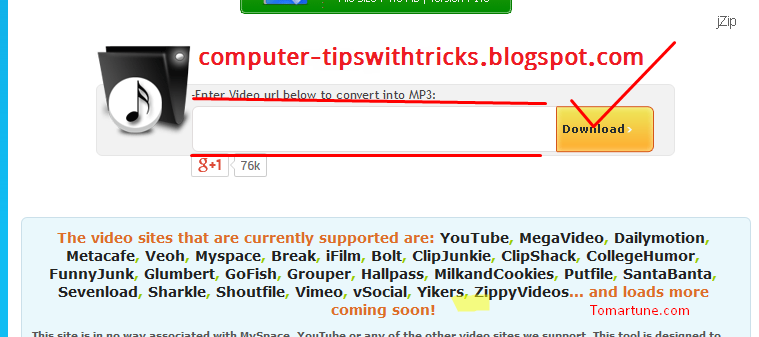
First go to this link Click to download youtube videos in mp3 format, you will see this picture shown bellow-


Then mark the red spot in the box and paste the link to your youtube video and then click download.
Then a few second you will verify the link and download will start automatically.  


Read More..

HD Dark Desktop Background Wallpapers Download

To save the image, first click to enlarge the image, then right-click on it and click on Save Image As.. or simply right-click on the thumbnail and click on Save Link AS..
Note: all are high resolution images greater than 1024 x 728 px.


3D RenderDark Night AngelsDark Night Angels

Linkin Park Group HD WallpaperWindows 7 HD wallpaperBlack HD Wallpaper

Audi R Zero WallpaperDC Black Wallpaper HDBlack Cat Wallpaper

WDKCL Dark Background Wallpaper
Read More..

Friday, October 28, 2016

Launching the Quantum Artificial Intelligence Lab


We believe quantum computing may help solve some of the most challenging computer science problems, particularly in machine learning. Machine learning is all about building better models of the world to make more accurate predictions. If we want to cure diseases, we need better models of how they develop. If we want to create effective environmental policies, we need better models of what’s happening to our climate. And if we want to build a more useful search engine, we need to better understand spoken questions and what’s on the web so you get the best answer.

So today we’re launching the Quantum Artificial Intelligence Lab. NASA’s Ames Research Center will host the lab, which will house a quantum computer from D-Wave Systems, and the USRA (Universities Space Research Association) will invite researchers from around the world to share time on it. Our goal: to study how quantum computing might advance machine learning.

Machine learning is highly difficult. It’s what mathematicians call an “NP-hard” problem. That’s because building a good model is really a creative act. As an analogy, consider what it takes to architect a house. You’re balancing lots of constraints -- budget, usage requirements, space limitations, etc. -- but still trying to create the most beautiful house you can. A creative architect will find a great solution. Mathematically speaking the architect is solving an optimization problem and creativity can be thought of as the ability to come up with a good solution given an objective and constraints.

Classical computers aren’t well suited to these types of creative problems. Solving such problems can be imagined as trying to find the lowest point on a surface covered in hills and valleys. Classical computing might use what’s called “gradient descent”: start at a random spot on the surface, look around for a lower spot to walk down to, and repeat until you can’t walk downhill anymore. But all too often that gets you stuck in a “local minimum” -- a valley that isn’t the very lowest point on the surface.

That’s where quantum computing comes in. It lets you cheat a little, giving you some chance to “tunnel” through a ridge to see if there’s a lower valley hidden beyond it. This gives you a much better shot at finding the true lowest point -- the optimal solution.

We’ve already developed some quantum machine learning algorithms. One produces very compact, efficient recognizers -- very useful when you’re short on power, as on a mobile device. Another can handle highly polluted training data, where a high percentage of the examples are mislabeled, as they often are in the real world. And we’ve learned some useful principles: e.g., you get the best results not with pure quantum computing, but by mixing quantum and classical computing.

Can we move these ideas from theory to practice, building real solutions on quantum hardware? Answering this question is what the Quantum Artificial Intelligence Lab is for. We hope it helps researchers construct more efficient and more accurate models for everything from speech recognition, to web search, to protein folding. We actually think quantum machine learning may provide the most creative problem-solving process under the known laws of physics. We’re excited to get started with NASA Ames, D-Wave, the USRA, and scientists from around the world.
Read More..

Syrias children learn to code with the Raspberry Pi

Three years ago, when I was looking for an example of social unrest to highlight the use of social media as a communication tool for protestors in my book, I chose the then new uprising in Syria. Im horrified the conflict still continues. However, I just came across a surprisingly good piece of news from that awful conflict; the use of the Raspberry Pi to teach Syrian refugees in Lebanon to code. Read the full article in the Guardian to learn more.

from The Universal Machine http://universal-machine.blogspot.com/

IFTTT

Put the internet to work for you.

Turn off or edit this Recipe

Read More..
 
Copyright 2009 Information Blog
Powered By Blogger